Generative cover art
All podcasts require cover art to be valid: this is a requirement from podcast apps and directories. However, this can be an outsized ask for some folks, especially those who have limited vision. Over the years, our support system has received over a dozen requests to create artwork by users who aren’t able to easily do it themselves. This is a real problem, and a significant hurdle for folks with certain accessibility needs to start a podcast.
Generative AI offers an incredible tool for folks who aren’t able to easily create their own cover art. On the New Podcast and Podcast Settings pages, we now allow paid customers to generate artwork using Black Forest Labs’ FLUX.2 model. You can generate up to ten images every hour.
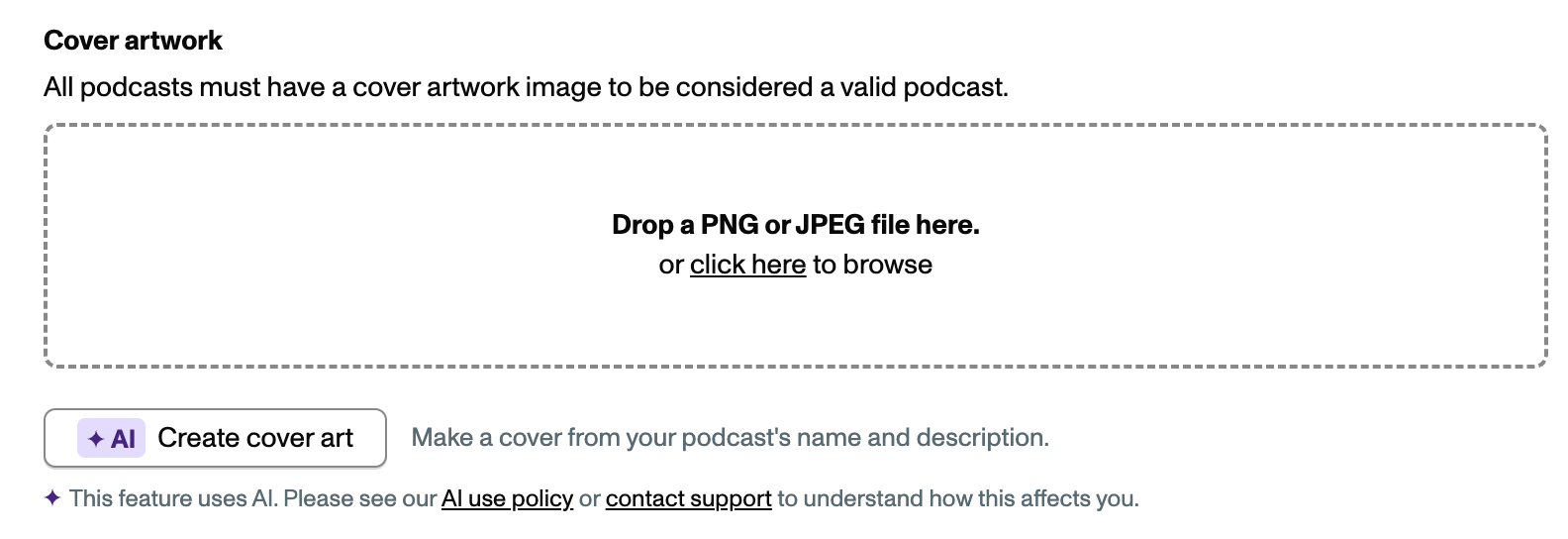
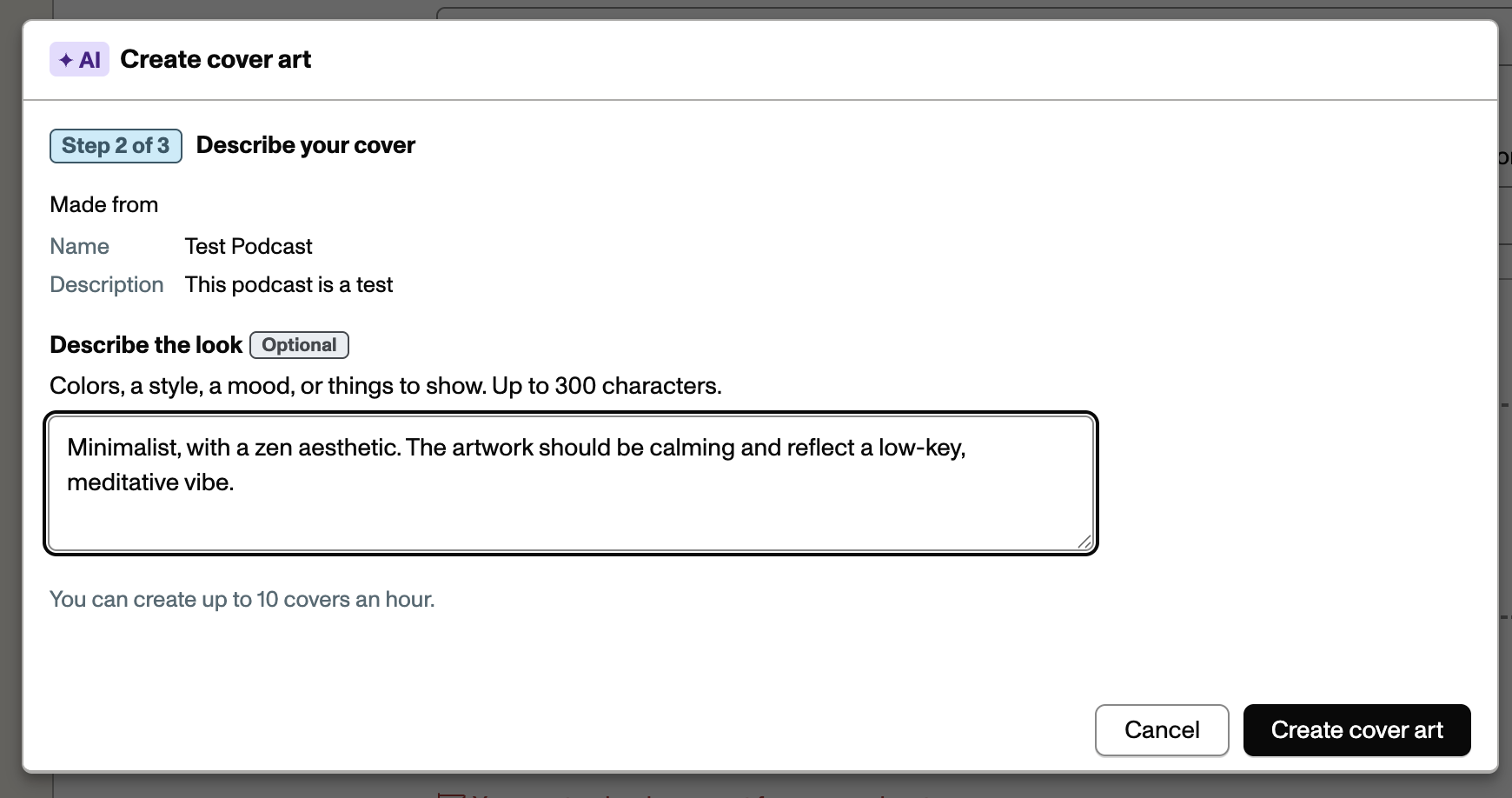
You’ll first be presented with information about how the feature works, including details about what information is sent to our AI provider and how this affects you. On the second step, you can provide a description of what you’d like the artwork to look like.
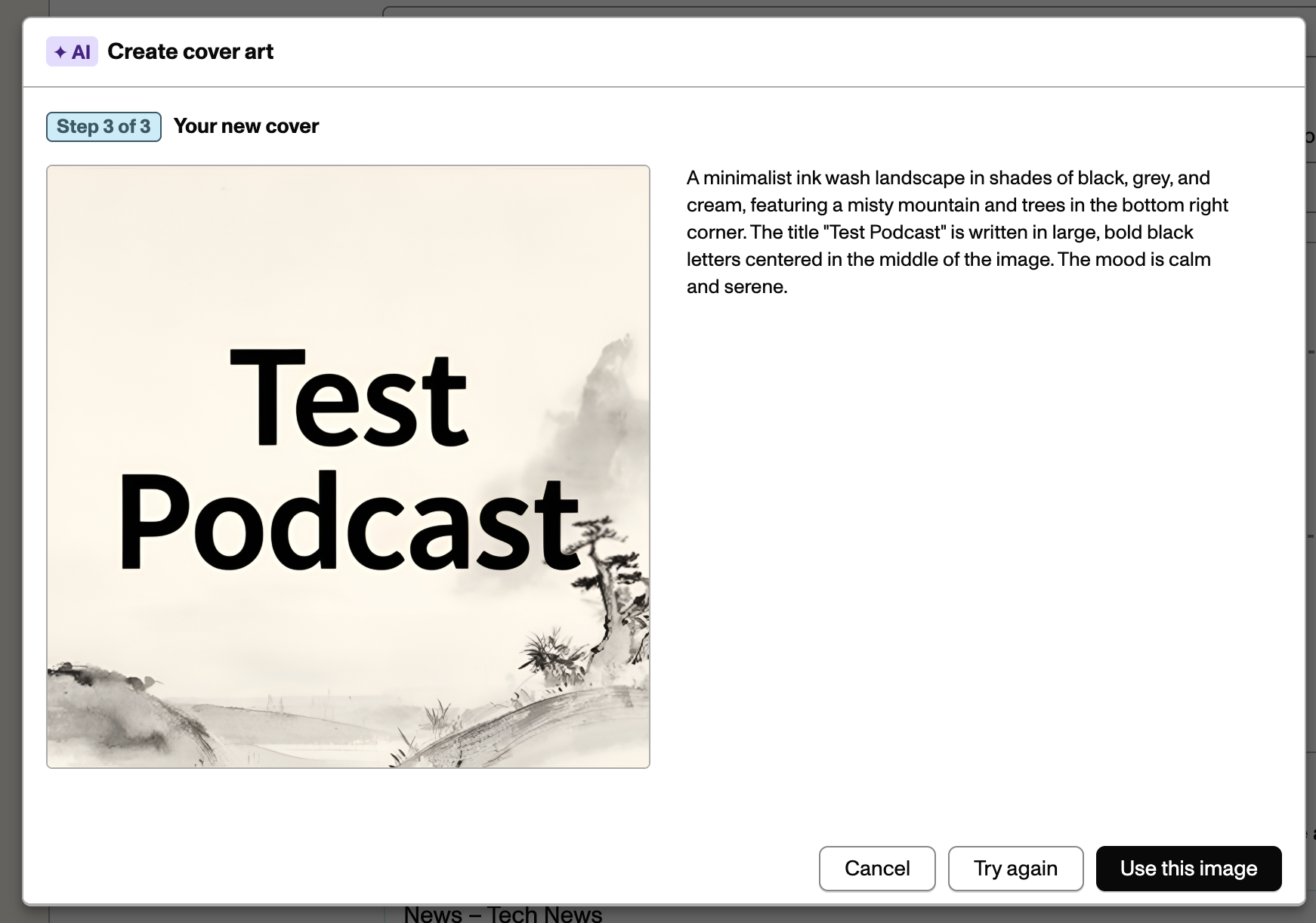
We’ll then generate the image, which can take up to a minute. When the image is returned, we’ll show it along with a text description.
Our use of AI
Section titled “Our use of AI”In building this feature, we evaluated many image models, and settled on FLUX.2 for a few reasons:
- The model made very few mistakes when generating text
- The model avoids making artwork that would be outright rejected by most podcast apps and directories
- In our tests, the generated images were the most aesthetically interesting
The text descriptions are created using Gemma 4. Gemma does a great job of describing the image subjectively, while also reading back the text exactly (including typos, which is important for folks who can’t see issues in the image).
Both models are open-weight, and run in an environment where no data is retained or repurposed for any reason. Only the information strictly required to complete the request is sent. As always, we do our best to use AI as responsibly as possible. You can always read about how Pinecast uses AI on our AI use page.